

After a Decade of Uncertainty, a Fixed Point
For close to ten years, Australian small businesses have planned asset purchases around a moving target. The instant asset write-off threshold changed repeatedly, was extended in twelve-month increments, and in several years was not legislated until the financial year was already well underway. Business owners were left guessing whether a purchase made in March would still qualify by the time they lodged.
That has now changed. On 19 August 2026, the Senate passed the Treasury Laws Amendment (Tax Reform No. 2) Bill 2026, a day after it cleared the House of Representatives. The legislation makes the $20,000 instant asset write-off a permanent feature of the tax system from 1 July 2026, with no sunset clause and no annual renewal. The Australian Taxation Office has since confirmed the measure is law.
For anyone who has put off a purchase because they could not be sure where the rules would land, the picture is considerably clearer than it was a month ago.
What the Measure Actually Does
Eligible small businesses with an aggregated annual turnover of less than $10 million can immediately deduct the taxable purpose proportion of eligible depreciating assets costing less than $20,000, rather than depreciating them over several years.
Two details are worth understanding properly, because they are commonly misread:
- The threshold applies per asset, not per business. A business can instantly write off multiple qualifying assets in the same income year, provided each one sits under $20,000.
- The asset must be first used or installed ready for use on or after 1 July 2026. Ordering something is not the trigger. Having it in place and ready to work is.
Assets costing $20,000 or more do not miss out entirely, but they are treated differently. They can go into the small business simplified depreciation pool and be depreciated at 15% in the first income year and 30% each year after that. Where a pool balance falls under $20,000 at the end of an income year, that balance can also be written off.
The Part Most Coverage Skips
It is worth being direct about something a lot of finance content glosses over: $20,000 does not buy a lot of heavy equipment.
An excavator, a prime mover, a tipper or a commercial-grade machine will comfortably exceed the threshold. Those purchases are not instant write-off purchases. They are pool depreciation purchases, and the cash flow maths on them works differently.
Where the write-off genuinely bites is further down the price list, and that covers more of a typical business than people assume:
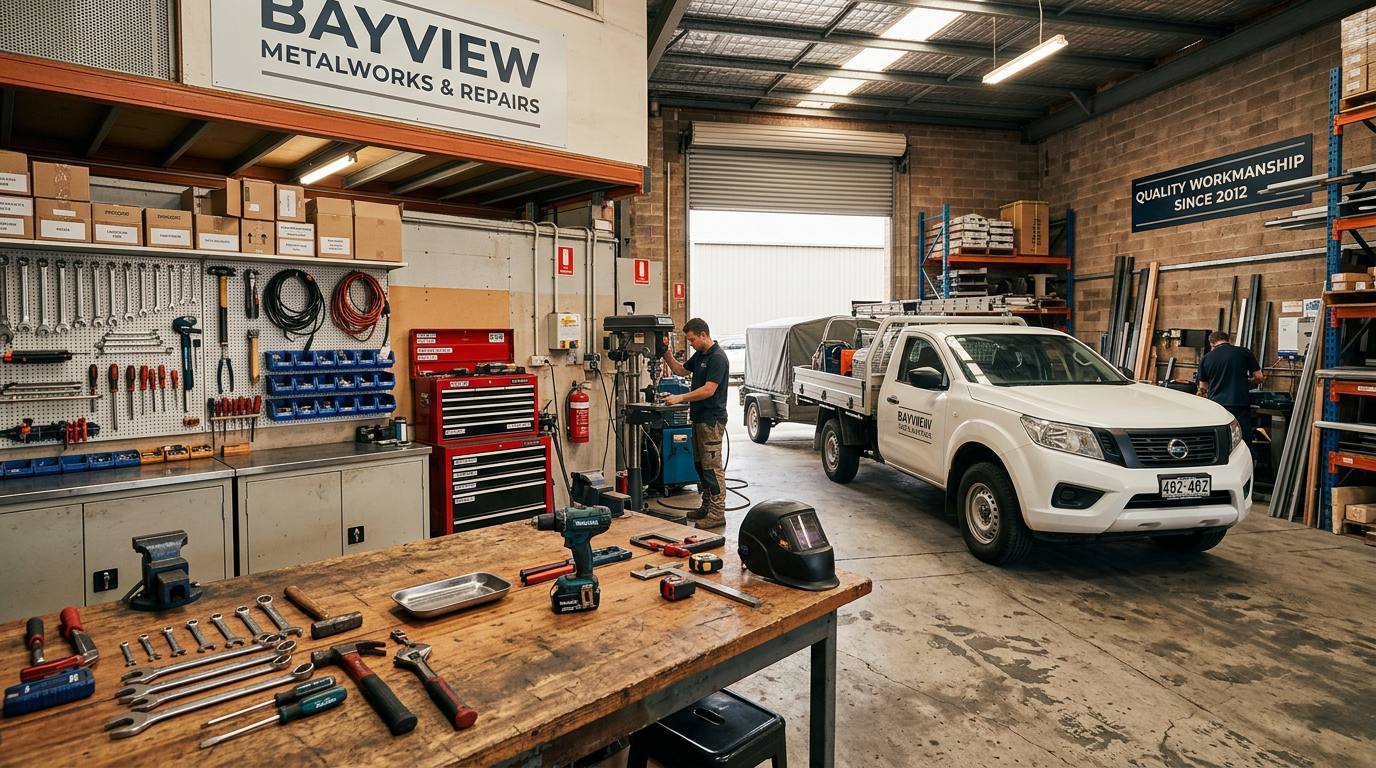
- Trailers, tooling and workshop equipment
- Smaller plant and attachments
- Computers, monitors, point-of-sale hardware and office fitout
- Safety equipment and site gear
- Second-hand assets, which are eligible in the same way as new ones, subject to the usual exclusions
If your business buys a steady trickle of sub-$20,000 items rather than one large machine, a permanent threshold is arguably more useful to you than it is to someone making a single six-figure purchase.
Loss Carry-Back Passed at the Same Time
The same bill introduced a loss carry-back measure for corporate tax entities that are not significant global entities. It allows an eligible company to carry back a tax loss for an income year beginning on or after 1 July 2026 and apply it against tax paid in either or both of the two previous income years, generating a refundable tax offset.
Treasurer Jim Chalmers said the measure is expected to assist around 85,000 businesses, most of them small. Treasury also estimated the write-off change alone will reduce compliance costs across affected businesses by a combined $32 million annually.
Whether either measure applies to your business depends entirely on your structure and circumstances. That is a conversation for your accountant, not a blog post.
What Permanence Actually Changes
The threshold itself has not moved. It was $20,000 before and it is $20,000 now. The genuine change is the removal of the deadline, and that matters more than it sounds.
A decade of temporary extensions trained Australian businesses to compress asset decisions into a panicked June. Purchases got rushed to beat a cut-off, which meant accepting whatever stock was available, whatever price was on offer, and whatever finance could be arranged quickly.
With a permanent threshold, purchases can be timed to the things that should drive them:
- When the business actually needs the asset, rather than when the calendar demands it
- When supplier pricing is favourable, including end-of-model runs and clearance stock
- When cash flow suits, rather than in a single concentrated month
- When you have had time to arrange finance properly, rather than accepting the first structure put in front of you
That last point is where most of the value sits, and it is the one businesses tend to undervalue.
Financing an Asset and Claiming the Write-Off
A question we hear often: if the asset is financed rather than paid for outright, does the write-off still apply?
The short answer is that it depends on how the finance is structured. Under some arrangements the business owns the asset from the outset and the financier simply holds security over it, which affects how the asset is treated for tax. Under others, the financier retains ownership and the treatment is different again. Chattel mortgages, leases and rentals are not interchangeable, and the differences have real consequences at tax time.
We are not tax advisers, and we will not pretend the answer is simple. Confirm the treatment with your accountant before you commit to a structure, because unwinding the wrong one afterwards is expensive.
What we can say is that the structure question is worth asking before you sign, not after. Businesses that arrange finance under time pressure rarely ask it at all.
Working out what a purchase might look like? Our repayment calculator gives you a quick estimate to take into that conversation.
Housekeeping Worth Doing Now
Permanence removes the deadline. It does not remove the record-keeping.
- Keep invoices and evidence of installation or first use filed per asset. The eligibility date turns on when the asset was ready for use, so the paperwork needs to show it.
- Document your business-use percentage for anything used partly privately.
- Check your aggregated turnover annually, including connected and affiliated entities. This is the test people most often get wrong.
- Review your pool balance at year end for the under-$20,000 clean-up.
None of this is glamorous, and all of it is the difference between a deduction claimed cleanly and one unwound in a review.
Where to Start
If this change has moved a purchase from "maybe next year" to "worth looking at now", the sequence that works is simple. Speak to your accountant about how the purchase should be treated. Then work out how it is going to be funded, and who you should be speaking to about it.
The second part is where most people stall, because the finance market is genuinely fragmented. The professional who is excellent at work vehicles is not necessarily the right person for machinery, and neither of them is the right person for a truck or a commercial fleet.
That is where L&R Consultants comes in. We help Australians and businesses understand where to start by taking the time to understand what they are looking to achieve and connecting them with the right finance specialist for their needs. Rather than expecting you to work out who you should speak to, you start with L&R. We make the connection, and your finance specialist takes it from there.
There is no cost and no obligation to have the conversation.
Make an enquiry today or take a look at our finance areas to see the categories we cover.
---
*This article is general information only and is current as at 11 September 2026. It is not tax, financial or legal advice, and it does not take your circumstances into account. Tax outcomes depend on your structure, turnover and how an asset is acquired and used. Confirm your position with a registered tax agent before making any purchasing decision. Full details of the measure are available on the ATO website.*